

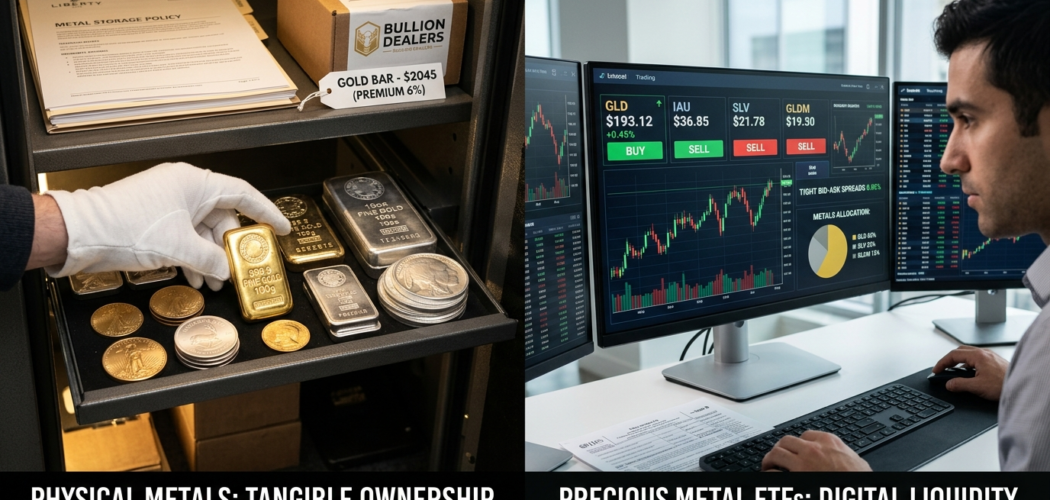
When it comes to investing in precious metals, one of the most common questions revolves around gold vs silver ETF choices and whether physical assets are the better route. While both options offer exposure to gold and silver, they function very differently in practice. Therefore, understanding how each works can help you choose the right approach based on your goals, risk tolerance, and investment style.
At a basic level, physical metals provide direct ownership, while ETFs offer convenience and liquidity. However, the decision goes beyond convenience alone. Each option has its own advantages, limitations, and risks that can significantly impact your overall investment experience. Because of this, taking a closer look at how these choices compare is essential before committing your capital.
Understanding Physical Metals And ETFs
Before diving deeper into gold vs silver ETF comparisons, it is important to understand what each option represents. Physical gold and silver include coins, bars, and bullion that you can hold or store. These assets carry intrinsic value and do not rely on financial institutions. As a result, many investors see them as a reliable hedge during economic uncertainty.
On the other hand, ETFs, or exchange-traded funds, track the price of gold or silver without requiring you to own the metals directly. These funds trade on stock exchanges, making them easy to buy and sell. Therefore, they provide a simple way to gain exposure to metal prices without dealing with storage or security concerns.
However, while ETFs offer convenience, they represent a claim on the metal rather than ownership. This distinction becomes important during times of financial stress. Because of this, understanding how each option behaves under different conditions helps you make a more informed choice.
Liquidity And Ease Of Access
Liquidity is a major factor when comparing gold vs silver ETF investments with physical metals. ETFs are highly liquid because they trade like stocks. You can buy or sell them instantly during market hours, which makes them ideal for active traders or those who want quick access to their funds.
In contrast, physical metals require more effort to sell. You may need to find a buyer, visit a dealer, or accept a spread between buying and selling prices. Therefore, liquidity is lower compared to ETFs. However, this slower process can also encourage long-term holding, which may benefit disciplined investors.
Additionally, ETFs allow you to invest with smaller amounts of money. Instead of purchasing a full ounce of gold, you can buy shares that represent a fraction of that value. As a result, ETFs make it easier for beginners to enter the market without a large upfront investment.
Storage, Security, And Ownership
Storage is another critical difference in gold vs silver ETF decisions. Physical metals require secure storage, whether at home, in a bank, or through a professional vaulting service. While this adds an extra layer of responsibility, it also ensures that you have full control over your assets.
Security concerns naturally arise when holding physical metals. Theft or loss can occur if proper precautions are not taken. Therefore, many investors choose insured storage solutions to protect their holdings. Although this adds cost, it provides peace of mind.
ETFs eliminate these concerns because the fund handles storage and security. However, this convenience comes with trade-offs. Since you do not physically own the metal, you rely on the fund’s structure and management. As a result, some investors prefer physical assets for the sense of direct ownership and independence they provide.
Costs And Fees Over Time
Costs play a significant role when evaluating gold vs silver ETF options versus physical metals. Physical assets typically involve a premium over the spot price when you buy them. This premium covers manufacturing, distribution, and dealer margins. Additionally, storage and insurance costs may apply over time.
ETFs, on the other hand, come with management fees, often referred to as expense ratios. These fees are usually small but accumulate over time. Therefore, long-term investors should consider how these ongoing costs impact overall returns.
Moreover, trading ETFs may involve brokerage fees, depending on your platform. While these costs are often minimal, frequent trading can add up. As a result, comparing total expenses between physical and ETF investments is essential for making a cost-effective decision.
Market Flexibility And Trading Strategies
Flexibility is another key factor in the gold vs silver ETF debate. ETFs allow investors to implement various trading strategies, including short-term trading, hedging, and diversification. Because they are easily traded, they provide opportunities to respond quickly to market changes.
Physical metals, however, are better suited for long-term holding. They are less practical for frequent trading due to transaction costs and logistical challenges. Nevertheless, this limitation can also be an advantage for investors who prefer a buy-and-hold approach.
Additionally, ETFs can be integrated into broader portfolios alongside stocks and bonds. This integration makes it easier to manage asset allocation. Therefore, investors who value flexibility often lean toward ETFs, while those seeking stability may prefer physical metals.
Risk Factors And Market Behavior
Every investment carries risk, and gold vs silver ETF choices are no exception. Physical metals are generally considered safer in terms of counterparty risk because you own the asset directly. However, they are still subject to price fluctuations and market conditions.
ETFs introduce additional risks related to fund management and market liquidity. For example, extreme market conditions could affect how closely the ETF tracks the underlying metal price. While these situations are rare, they highlight the importance of understanding the structure of the fund.
Furthermore, silver tends to be more volatile than gold, regardless of whether you invest through physical assets or ETFs. This volatility can create opportunities, but it also increases risk. Therefore, choosing between gold and silver requires careful consideration of your risk tolerance.
Tax Considerations And Regulations
Taxes can influence your decision when comparing gold vs silver ETF investments with physical metals. In many regions, physical gold and silver may be subject to capital gains tax when sold. Additionally, some countries impose value-added tax on silver purchases.
ETFs may have different tax treatments depending on their structure and location. For instance, some funds are taxed as collectibles, while others follow standard capital gains rules. Therefore, understanding local tax regulations is essential before making a decision.
Moreover, reporting requirements may vary between physical and ETF investments. Keeping accurate records ensures compliance and helps you manage your financial obligations effectively. As a result, consulting a tax professional can provide valuable guidance.
Building A Balanced Precious Metals Strategy
Rather than choosing one option exclusively, many investors combine both approaches when considering gold vs silver ETF strategies. Holding physical metals provides security and long-term value, while ETFs offer flexibility and ease of trading. This combination creates a balanced portfolio that benefits from the strengths of each option.
For example, you might allocate a portion of your investment to physical gold for stability, while using ETFs to take advantage of short-term market movements. This approach allows you to diversify within the precious metals sector itself. As a result, you can reduce risk while maintaining growth potential.
Additionally, balancing gold and silver within your portfolio can further enhance diversification. Gold provides stability, while silver offers higher growth potential due to its industrial demand. Therefore, combining both metals with different investment methods creates a more resilient strategy.
Conclusion
Choosing between physical metals and ETFs ultimately depends on your investment goals and preferences. Gold vs silver ETF comparisons highlight the trade-offs between convenience, ownership, and flexibility. While ETFs offer ease of access and liquidity, physical metals provide direct ownership and long-term security.
By understanding the advantages and limitations of each option, you can make a more informed decision that aligns with your financial objectives. Whether you prioritize flexibility or stability, both approaches have a place in a well-rounded portfolio. Ultimately, a balanced strategy that combines the strengths of both can help you navigate the complexities of the precious metals market with confidence.
FAQ
- Should beginners choose ETFs or physical metals first?
Beginners often start with ETFs due to ease of access, but physical metals offer long-term security. - Are ETFs safer than owning physical gold or silver?
ETFs are convenient, but physical ownership removes reliance on financial institutions. - Which option is better for long-term investing?
Physical metals are generally preferred for long-term holding, while ETFs suit active trading. - Do ETFs track metal prices accurately?
Most ETFs closely follow metal prices, although slight differences can occur during volatile markets. - Can I combine both investment methods?
Yes, combining physical assets and ETFs can create a balanced and flexible investment strategy.