

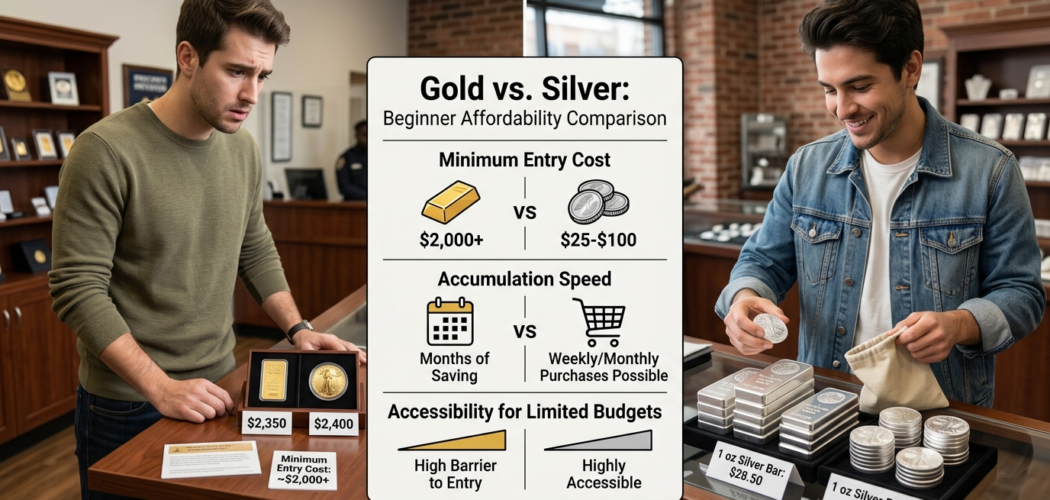
Understanding gold vs silver affordability is one of the most important starting points for new investors entering the precious metals market. While both metals offer long-term value and protection against economic uncertainty, the cost of entry can vary significantly. Therefore, knowing which one fits your budget and goals can help you begin your investment journey with confidence.
At first glance, gold and silver appear similar because they are both valuable and widely recognized. However, their price differences make a major impact on accessibility. Gold is often seen as a premium asset, while silver is considered more approachable for beginners. Because of this, many investors start with silver before gradually expanding into gold.
Price Differences And Entry Barriers
The most obvious factor in gold vs silver affordability is the price per ounce. Gold is significantly more expensive, which means even a small purchase requires a higher initial investment. As a result, beginners may find it difficult to start with gold unless they have a larger budget.
In contrast, silver is much more affordable. Investors can purchase multiple ounces of silver for the price of a single fraction of gold. Therefore, it allows for greater flexibility and easier entry into the market. This lower cost also enables investors to build their holdings gradually without a large upfront commitment.
Additionally, silver’s affordability makes it easier to experiment and learn. New investors can gain experience without risking substantial capital. Because of this, silver often becomes the preferred choice for those just starting out.
Flexibility In Investment Options
Another important aspect of gold vs silver affordability is the range of investment options available. Silver offers more flexibility because of its lower price. Investors can choose from coins, bars, and even small denominations, making it easier to adjust their purchases based on budget.
Gold, while also available in different forms, often requires a higher commitment per purchase. Although fractional gold coins exist, they usually come with higher premiums. Therefore, the cost per unit can be less efficient compared to silver.
Moreover, silver allows investors to diversify within the metal itself. By purchasing different types of silver products, investors can spread their risk more effectively. As a result, silver provides a more adaptable entry point for those exploring the market.
Storage And Practical Considerations
Storage plays a role in gold vs silver affordability, although it is often overlooked. Gold’s high value density means that a small amount can represent significant wealth. Therefore, it is easier to store and transport compared to silver.
Silver, on the other hand, requires more space due to its lower value per ounce. While it is cheaper to acquire, storing large quantities can become challenging over time. As a result, storage costs may increase as your holdings grow.
However, for beginners starting with smaller amounts, this difference may not be significant. In fact, silver’s affordability often outweighs storage concerns in the early stages. Therefore, it remains a practical choice for those building their portfolio gradually.
Liquidity And Ease Of Selling
Liquidity is another factor to consider when evaluating gold vs silver affordability. Gold is highly liquid and widely accepted, making it easy to sell quickly. This advantage is particularly important for investors who may need immediate access to funds.
Silver is also liquid, but selling larger quantities may take more effort due to its lower value per unit. However, for smaller transactions, silver remains relatively easy to trade. Therefore, liquidity should be considered alongside affordability when choosing between the two.
Additionally, both metals benefit from strong global demand. This demand ensures that buyers are readily available, which supports their long-term value. As a result, both gold and silver provide reliable options for investors.
Premiums And Additional Costs
When comparing gold vs silver affordability, it is important to consider premiums and additional costs. Premiums are the extra charges above the spot price, which cover manufacturing and distribution. Silver often has higher percentage premiums due to its lower base price.
Gold, while more expensive overall, may have lower percentage premiums. However, the total cost remains higher due to its value. Therefore, understanding these costs helps you make more informed decisions.
Additionally, storage and insurance expenses may vary between the two metals. Gold typically requires less space, which can reduce storage costs. On the other hand, silver’s bulk may increase these expenses over time. As a result, affordability should be evaluated beyond the initial purchase price.
Long-Term Value And Growth Potential
Although gold vs silver affordability focuses on entry costs, long-term value should also be considered. Gold is known for its stability and ability to preserve wealth over time. Therefore, it is often favored by investors seeking security.
Silver, while more volatile, offers greater growth potential. Its industrial demand can drive price increases during periods of economic expansion. As a result, silver can provide higher returns, although it comes with increased risk.
For beginners, starting with silver allows exposure to market movements without a large financial commitment. Over time, investors can add gold to their portfolio for stability. This combination creates a balanced approach that benefits from both metals.
Which Metal Is Easier To Start With
When evaluating gold vs silver affordability, silver clearly stands out as the easier option for beginners. Its lower price, flexibility, and accessibility make it an ideal starting point. Investors can build their knowledge and confidence without significant financial pressure.
However, gold should not be overlooked. While it requires a higher initial investment, it offers unmatched stability and global recognition. Therefore, it remains an essential part of a well-rounded portfolio.
Ultimately, the choice depends on your financial situation and goals. If affordability is your main concern, silver provides a practical entry point. However, if you prioritize long-term security, gold may be worth the higher cost.
Building A Balanced Precious Metals Strategy
A balanced approach often works best when considering gold vs silver affordability. By starting with silver and gradually adding gold, investors can benefit from both accessibility and stability. This strategy allows for steady growth while managing risk effectively.
Additionally, combining both metals helps diversify your portfolio within the precious metals sector. Silver provides growth potential, while gold offers protection. Therefore, this combination creates a more resilient investment strategy.
Over time, adjusting your allocation based on market conditions and personal goals ensures continued success. By staying flexible and informed, you can make the most of your investments.
Conclusion
Gold vs silver affordability plays a crucial role in determining which metal is easier to start investing in. While gold offers stability and long-term value, its higher price can be a barrier for beginners. Silver, on the other hand, provides an accessible entry point with greater flexibility and growth potential.
By understanding these differences, investors can make informed decisions that align with their goals. Starting with silver allows for gradual learning and portfolio building, while adding gold enhances stability over time. Ultimately, combining both metals creates a balanced approach that supports long-term success.
Choosing the right starting point is less about picking one metal over the other and more about finding the balance that works for you. With the right strategy, both gold and silver can play a valuable role in your financial future.
FAQ
- Which metal is cheaper to start investing in?
Silver is generally more affordable, making it easier for beginners to enter the market. - Is gold worth buying despite its higher price?
Yes, gold offers stability and long-term value, which can justify its higher cost. - Can I start with silver and later invest in gold?
Yes, many investors begin with silver and gradually add gold as their portfolio grows. - Does storage differ between the two metals?
Yes, silver requires more space due to its lower value per ounce compared to gold. - Are both metals easy to sell when needed?
Both are liquid assets, although gold may be easier to sell in larger amounts quickly.