

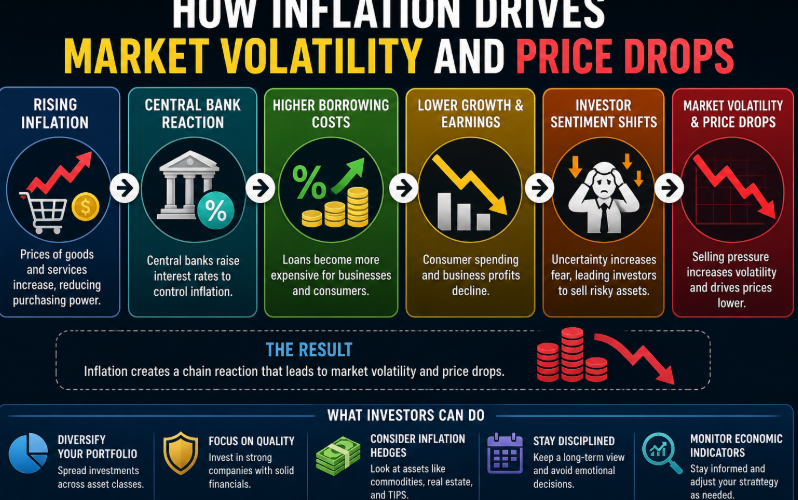
Understanding how inflation drives market volatility is essential for investors trying to navigate uncertain financial conditions. Inflation does more than raise the cost of living; it influences interest rates, investor sentiment, and overall market stability. As a result, when inflation rises or becomes unpredictable, markets often react with sharp price movements and increased volatility.
At its core, inflation reflects the rising cost of goods and services. While moderate inflation is normal, sudden increases can create uncertainty. Therefore, investors begin to adjust expectations, leading to shifts in buying and selling behavior. This reaction is a key reason why inflation drives market volatility and triggers noticeable price drops.
The Link Between Inflation and Investor Behavior
Investor behavior changes quickly when inflation becomes a concern. As prices rise, purchasing power declines, and uncertainty grows. Consequently, investors reassess their portfolios, often shifting away from riskier assets.
This shift can lead to increased selling pressure. When many investors act at the same time, markets experience rapid declines. As a result, inflation drives market volatility by amplifying emotional reactions and collective decision-making.
Moreover, fear plays a significant role. Investors worry about how inflation will impact earnings, interest rates, and economic growth. Because of this, even small changes in inflation data can cause strong market reactions.
Interest Rates and Their Impact on Markets
One of the main ways inflation affects markets is through interest rates. Central banks often raise rates to control rising prices. While this action helps stabilize inflation, it can also slow economic growth.
Higher interest rates increase borrowing costs for businesses and consumers. As a result, spending and investment may decline. This reduction in activity often leads to lower corporate earnings, which can push stock prices down.
Additionally, rising rates make fixed-income investments more attractive. Investors may move funds from stocks to bonds, increasing selling pressure in equity markets. Therefore, inflation drives market volatility by influencing central bank decisions and interest rate changes.
How Inflation Affects Corporate Earnings
Corporate earnings are directly impacted by inflation. As input costs rise, companies may struggle to maintain profit margins. While some businesses can pass costs on to consumers, others cannot.
When earnings expectations decline, stock prices often follow. Investors adjust valuations based on future profitability, which can lead to market downturns. Consequently, inflation drives market volatility by affecting company performance and investor confidence.
Furthermore, uncertainty about future costs adds to the challenge. Companies may delay expansion or investment plans, which can slow economic growth. This hesitation can further increase market instability.
Market Sentiment and Psychological Reactions
Market sentiment plays a crucial role in how inflation affects prices. When inflation rises unexpectedly, investors often react quickly, sometimes without fully analyzing the situation. This emotional response can lead to exaggerated market movements.
Fear of continued inflation can create a negative feedback loop. As prices fall, investors become more cautious, leading to further selling. Therefore, inflation drives market volatility not only through economic factors but also through psychological reactions.
Additionally, media coverage can amplify these effects. Headlines about rising prices and economic concerns can increase anxiety, prompting more investors to act defensively.
Liquidity and Capital Flow Changes
Inflation also influences liquidity and capital flow within markets. When inflation rises, central banks may reduce liquidity to control price increases. This reduction can make markets more sensitive to trading activity.
Lower liquidity means that even small trades can cause larger price movements. As a result, markets become more volatile. Therefore, inflation drives market volatility by affecting the availability of capital.
Capital flows also shift during inflationary periods. Investors may move funds into assets that are perceived as safer, such as commodities or bonds. This movement can lead to declines in other asset classes, increasing overall market instability.
Asset Class Reactions to Inflation
Different asset classes respond to inflation in various ways. Stocks, bonds, and commodities each react differently, which contributes to market volatility.
Stocks may decline if rising costs reduce profitability. Bonds can lose value as interest rates increase. Meanwhile, commodities often rise in price as inflation increases demand for tangible assets.
Because these reactions vary, investors constantly adjust their portfolios. This ongoing adjustment leads to increased trading activity and price fluctuations. Consequently, inflation drives market volatility across multiple asset classes.
Global Economic Influence on Volatility
Inflation does not occur in isolation. Global economic conditions can amplify its impact. For example, supply chain disruptions or geopolitical tensions can increase inflationary pressures.
When multiple factors combine, markets may react more strongly. Investors must consider both domestic and international influences when assessing risk. Therefore, inflation drives market volatility on a global scale.
Currency fluctuations also play a role. Inflation can weaken a currency, making imports more expensive. This effect can further increase inflation, creating additional uncertainty in markets.
Why Inflation Leads to Price Drops
Price drops often occur as a direct result of inflation-related changes. When investors anticipate slower growth or reduced earnings, they adjust valuations downward. This adjustment can lead to sharp declines in asset prices.
Additionally, higher interest rates reduce the present value of future earnings. This mathematical effect lowers stock valuations, contributing to market declines. As a result, inflation drives market volatility and price drops simultaneously.
Moreover, uncertainty about future policy decisions adds to the problem. Investors may sell assets preemptively, leading to further declines. This behavior highlights how expectations influence market outcomes.
Strategies to Manage Inflation-Driven Volatility
Managing volatility requires a thoughtful approach. Diversification is one of the most effective strategies. By spreading investments across different asset classes, you can reduce the impact of inflation on your portfolio.
Investing in inflation-resistant assets can also help. Commodities, real estate, and certain stocks may perform better during inflationary periods. Therefore, these assets can provide balance when inflation drives market volatility.
Additionally, maintaining a long-term perspective is crucial. Short-term fluctuations can be unsettling, but markets often stabilize over time. By staying focused on long-term goals, you can avoid making emotional decisions.
Building Confidence During Inflationary Periods
Confidence comes from understanding and preparation. Investors who understand how inflation affects markets are better equipped to handle volatility. They recognize patterns and respond strategically rather than emotionally.
Education plays a key role. Learning about economic indicators and market dynamics helps reduce uncertainty. As a result, you can approach investing with greater clarity.
Regular portfolio reviews can also improve confidence. By adjusting your strategy as conditions change, you maintain control over your investments. Therefore, preparation helps you navigate periods when inflation drives market volatility.
The Role of Discipline in Volatile Markets
Discipline is essential for long-term success. When markets become volatile, sticking to your strategy can prevent costly mistakes. Emotional decisions often lead to losses, while disciplined approaches support stability.
Setting clear rules for buying and selling can help. These rules remove guesswork and reduce the influence of fear. As a result, you can make more consistent decisions.
Consistency also matters. Regular investing, regardless of market conditions, helps smooth out volatility over time. Therefore, discipline is a key factor in managing situations where inflation drives market volatility.
Conclusion
Understanding how inflation drives market volatility and price drops is critical for navigating modern financial markets. Inflation influences interest rates, corporate earnings, and investor behavior, all of which contribute to market instability. While these effects can create challenges, they also provide opportunities for informed investors.
By focusing on diversification, maintaining a long-term perspective, and staying disciplined, you can manage risk more effectively. Markets will always experience fluctuations, but preparation and knowledge allow you to respond with confidence.
Ultimately, inflation is a powerful force, but it does not have to control your investment outcomes. By understanding its impact, you can make smarter decisions and build a more resilient financial strategy.
FAQ
1. Why does rising inflation make markets unstable?
Rising inflation creates uncertainty about interest rates and economic growth, which leads to increased market reactions.
2. How do interest rates affect stock prices?
Higher rates increase borrowing costs and reduce future earnings value, which can lower stock prices.
3. Can inflation benefit any investments?
Yes, assets like commodities and real estate may perform well during inflationary periods.
4. Is market volatility always negative?
No, volatility can create opportunities for investors to buy assets at lower prices.
5. How can investors prepare for inflation changes?
They can diversify portfolios, monitor economic indicators, and maintain a long-term strategy.