

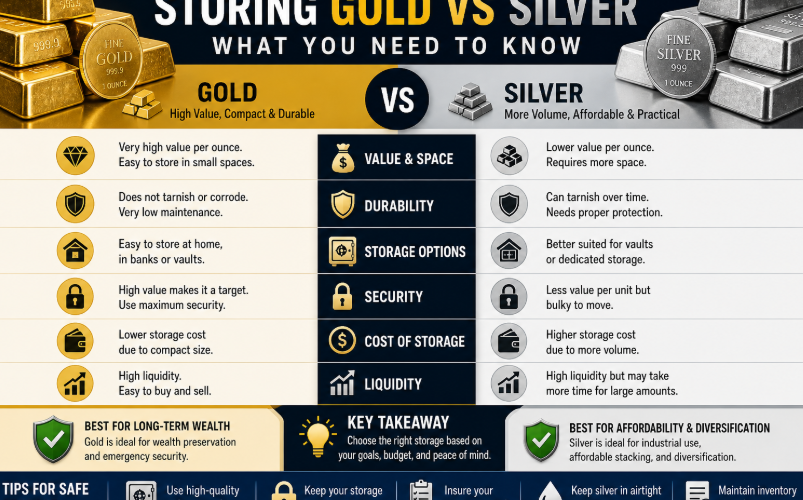
Understanding storing gold vs silver properly is essential for anyone investing in precious metals. While both assets hold long-term value, the way you store them can significantly impact security, accessibility, and overall peace of mind. Therefore, knowing the differences between storing each metal helps you avoid costly mistakes and protect your investment effectively.
At first, storing gold and silver may seem similar. However, their physical properties create very different storage challenges. Gold is compact and valuable in small quantities, while silver requires more space due to its lower price per ounce. As a result, storing gold vs silver becomes a practical decision as much as a financial one.
Why Storage Matters for Precious Metals
Storage is not just about keeping metals safe; it is about preserving value over time. Poor storage can lead to damage, theft, or even loss of access. Therefore, planning ahead is essential when considering storing gold vs silver in a secure way.
Security is the most obvious concern. Precious metals are valuable and can attract theft if not properly protected. Additionally, accessibility matters because you may need to sell or move your assets quickly. Balancing these factors is key to an effective storage strategy.
Moreover, storage conditions can affect the condition of your metals. While gold is resistant to corrosion, silver can tarnish over time. Because of this, storing gold vs silver requires slightly different environmental considerations.
Physical Differences That Affect Storage
Gold and silver differ significantly in density and value. Gold is much denser and more valuable per ounce, meaning a small amount holds significant wealth. Silver, on the other hand, takes up more space for the same value.
This difference impacts how you approach storage. For example, storing a large amount of silver may require dedicated space, while gold can be stored in a much smaller area. Therefore, storing gold vs silver involves practical considerations such as space and logistics.
Weight is another factor. Silver is heavier in bulk, which can make transportation and handling more challenging. As a result, investors must think about both storage and mobility when planning their strategy.
Home Storage Options
Storing precious metals at home is a common choice for many investors. It offers immediate access and eliminates third-party fees. However, it also comes with risks that must be managed carefully.
A high-quality safe is essential for home storage. It should be fireproof, waterproof, and securely anchored. This setup helps protect your metals from both theft and environmental damage. Therefore, when storing gold vs silver at home, investing in proper security is crucial.
Discretion is equally important. Keeping your holdings private reduces the risk of theft. Avoid sharing details about your storage location, and ensure that your home security system is reliable.
However, home storage may not be ideal for large quantities, especially silver. Space limitations and security concerns can make this option less practical for significant holdings.
Bank Safety Deposit Boxes
Safety deposit boxes offer a more secure alternative to home storage. Banks provide controlled environments and professional security systems, which reduce the risk of theft.
This option is particularly useful for gold due to its compact nature. Small quantities can be stored efficiently in limited space. Therefore, storing gold vs silver in a bank setting often favors gold for convenience.
However, there are limitations. Access is restricted to bank hours, which may not suit all investors. Additionally, contents are not always insured, so it is important to check the terms.
For silver, space constraints may become an issue. Large quantities may require multiple boxes, increasing costs. As a result, this method may be less practical for silver storage.
Professional Vault Storage
Professional vault storage is one of the safest options available. Specialized facilities offer high-level security, insurance, and climate control. This option is often preferred by investors with large holdings.
Vault storage is particularly beneficial when storing gold vs silver in significant amounts. Gold can be stored efficiently, while silver can be managed without space limitations. Therefore, this method provides flexibility for both metals.
Additionally, many vault services offer easy buying and selling options. This convenience allows investors to manage their assets without physically moving them.
However, costs can be higher compared to other methods. Storage fees are typically based on the value or volume of your holdings. Therefore, it is important to weigh the benefits against the expenses.
Environmental Factors and Metal Protection
Environmental conditions play a role in preserving precious metals. Gold is highly resistant to corrosion and does not tarnish easily. As a result, it requires minimal maintenance.
Silver, however, is more sensitive to environmental factors. Exposure to air and moisture can cause tarnishing, which affects appearance but not intrinsic value. Therefore, storing gold vs silver requires different levels of care.
Using airtight containers and anti-tarnish materials can help protect silver. Additionally, maintaining a stable environment reduces the risk of damage. These precautions ensure that your metals remain in good condition over time.
Insurance and Risk Management
Insurance is an important consideration when storing precious metals. While physical storage provides security, unexpected events can still occur. Therefore, protecting your investment with insurance adds an extra layer of safety.
Home insurance policies may not fully cover precious metals. As a result, additional coverage may be necessary. When storing gold vs silver, it is important to verify what is included in your policy.
Professional storage facilities often include insurance as part of their services. This feature provides peace of mind and reduces the need for separate coverage. Therefore, many investors prefer this option for larger holdings.
Cost Considerations and Practical Trade-Offs
Cost is a key factor in choosing a storage method. Home storage has lower ongoing costs but requires an initial investment in security. Bank boxes and vault storage involve recurring fees.
Silver storage can be more expensive due to its volume. Larger quantities require more space, which increases costs. Therefore, storing gold vs silver often involves balancing value and storage efficiency.
Additionally, transportation costs should be considered. Moving large amounts of silver can be expensive and time-consuming. As a result, planning ahead helps minimize unnecessary expenses.
Accessibility and Liquidity
Accessibility is another important factor. Investors need to consider how quickly they can access their metals. Home storage offers immediate access, while bank and vault options may have restrictions.
Liquidity also matters. When selling precious metals, quick access can make a difference. Therefore, storing gold vs silver should align with your investment goals and timeline.
Some investors prefer a combination approach. Keeping a portion at home for quick access and storing the rest in secure facilities provides balance. This strategy improves both security and flexibility.
Balancing Security and Convenience
Choosing the right storage method involves balancing security and convenience. High-security options may limit access, while convenient methods may increase risk. Therefore, finding the right balance is essential.
Diversifying storage locations can reduce risk. By spreading your holdings across multiple locations, you protect against potential losses. This approach is especially useful when storing gold vs silver in larger quantities.
Additionally, regular reviews of your storage strategy help ensure it remains effective. As your holdings grow, your storage needs may change. Therefore, staying proactive is key to maintaining security.
Conclusion
Storing gold vs silver requires careful planning and a clear understanding of each metal’s unique characteristics. Gold offers compact value and easier storage, while silver requires more space and additional protection. By considering factors such as security, cost, and accessibility, you can choose the best storage method for your needs.
Whether you prefer home storage, bank safety boxes, or professional vaults, each option has its advantages and limitations. Combining different methods can provide a balanced approach that enhances both security and flexibility.
Ultimately, the goal is to protect your investment while maintaining access when needed. By taking the time to plan your storage strategy, you can ensure that your precious metals remain safe, secure, and ready to support your long-term financial goals.
FAQ
1. Is it safer to store precious metals at home or in a bank?
Both options have benefits, but banks generally offer higher security while home storage provides easier access.
2. Why does silver require more storage space than gold?
Silver has a lower value per ounce, so larger quantities are needed to match the same value as gold.
3. Can silver tarnish in storage?
Yes, silver can tarnish over time, but proper storage methods can minimize this effect.
4. Do I need insurance for stored metals?
Insurance is recommended, especially for large holdings, to protect against theft or damage.
5. What is the best way to store large amounts of precious metals?
Professional vault storage is often the safest and most practical option for large investments.