

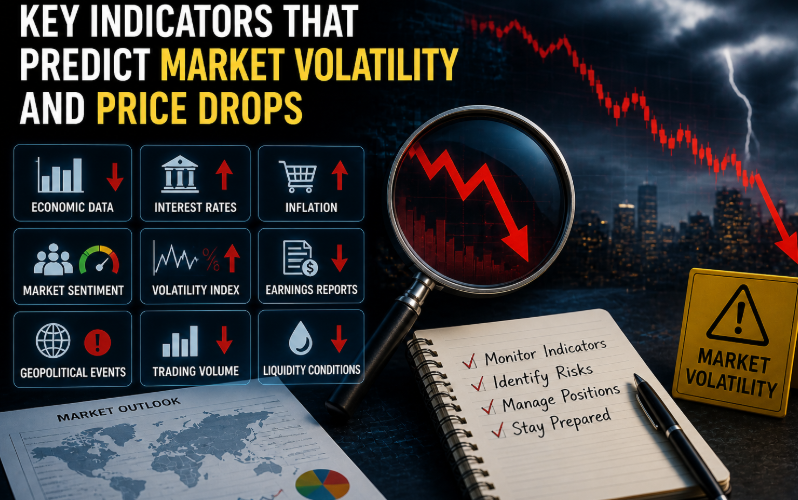
Learning how to predict market volatility indicators can give investors a powerful advantage when navigating uncertain conditions. Markets rarely move without warning, and although sudden price drops may feel unpredictable, there are often signals beneath the surface. Therefore, recognizing these indicators can help you prepare for changes rather than react emotionally when they happen.
At its core, market volatility reflects shifts in sentiment, liquidity, and economic expectations. When these factors begin to change, certain patterns emerge. As a result, investors who understand how to predict market volatility indicators can respond more calmly and strategically, even during turbulent periods.
Why Market Volatility Happens in the First Place
Before identifying signals, it is important to understand why volatility occurs. Markets respond to new information constantly, including economic data, corporate earnings, and geopolitical developments. When expectations shift quickly, prices adjust just as fast.
Uncertainty is a major driver of volatility. When investors are unsure about future outcomes, they tend to act cautiously or emotionally. Consequently, this behavior increases price swings and creates instability. This is why those who can predict market volatility indicators gain an edge in managing risk.
Additionally, liquidity plays a role. When fewer buyers and sellers are active, even small trades can cause large price movements. As a result, understanding liquidity conditions helps investors anticipate potential volatility before it escalates.
Economic Data as a Leading Signal
Economic indicators are among the most reliable tools for forecasting market behavior. Reports on inflation, employment, and economic growth often influence investor expectations. Therefore, these data points are essential when trying to predict market volatility indicators.
For example, rising inflation can lead to higher interest rates, which often increases market uncertainty. Similarly, weak employment data may signal economic slowdown, prompting investors to adjust their portfolios. As a result, markets may react sharply to these developments.
Moreover, economic surprises tend to have the strongest impact. When actual data differs significantly from expectations, volatility often spikes. Consequently, tracking forecasts alongside actual results can help you better predict market volatility indicators.
Interest Rates and Central Bank Policies
Interest rates are one of the most influential factors in financial markets. When central banks adjust rates, they affect borrowing costs, spending, and investment decisions. Because of this, interest rate changes are key signals when trying to predict market volatility indicators.
Rising rates often lead to tighter financial conditions, which can slow economic growth. As a result, investors may become cautious, increasing volatility. On the other hand, rate cuts can signal economic weakness, which may also create uncertainty.
Central bank communication is equally important. Speeches, policy statements, and projections can shift expectations quickly. Therefore, closely following central bank actions helps investors stay ahead of potential market changes.
Market Sentiment and Investor Behavior
Market sentiment reflects how investors feel about current conditions. When optimism is high, markets tend to rise steadily. However, when fear takes over, volatility increases rapidly. This makes sentiment a critical factor when you want to predict market volatility indicators.
One common measure of sentiment is the volatility index, often referred to as the “fear gauge.” When this index rises, it signals increased anxiety among investors. Consequently, higher readings often precede market downturns.
Additionally, trading volume can provide clues. Sudden spikes in volume may indicate strong reactions to news or changing sentiment. As a result, monitoring these patterns helps you better understand how to predict market volatility indicators effectively.
Technical Patterns and Price Signals
Technical analysis focuses on price movements and chart patterns. While it may seem complex, it offers valuable insights into market behavior. Many investors use these tools to predict market volatility indicators based on historical trends.
Support and resistance levels are key concepts. When prices approach these levels, they often react strongly. A break below support, for example, may signal increased selling pressure and potential volatility.
Moving averages also provide useful information. When short-term averages cross below long-term ones, it can indicate weakening momentum. Therefore, combining these tools helps identify shifts before they become obvious.
Moreover, sharp price movements without strong news can signal underlying instability. These early warning signs allow investors to prepare for potential changes.
Global Events and Geopolitical Risks
Global events can have a significant impact on financial markets. Political instability, trade disputes, and unexpected crises often create uncertainty. As a result, these events are important when trying to predict market volatility indicators.
For instance, geopolitical tensions can disrupt supply chains and economic activity. This disruption can lead to sudden market reactions. Similarly, global health crises or natural disasters can affect investor confidence.
Because these events are unpredictable, staying informed is essential. Monitoring global news helps investors anticipate potential risks and adjust their strategies accordingly.
Liquidity and Market Structure Changes
Liquidity conditions influence how easily assets can be bought or sold. When liquidity decreases, markets become more sensitive to trades. Consequently, this can lead to increased volatility.
Changes in market structure also play a role. For example, algorithmic trading can amplify price movements during periods of stress. Therefore, understanding these dynamics helps investors better predict market volatility indicators.
Additionally, periods of low trading activity, such as holidays or off-peak hours, can lead to exaggerated price swings. As a result, timing can influence how markets react to events.
Combining Multiple Indicators for Better Accuracy
No single indicator can predict market movements with complete accuracy. However, combining multiple signals can improve your ability to anticipate changes. This approach is essential for those who want to predict market volatility indicators effectively.
For example, economic data, sentiment indicators, and technical patterns can work together to provide a clearer picture. When several signals align, the likelihood of volatility increases.
Moreover, consistency is key. Regularly monitoring these indicators helps you identify trends over time. As a result, you can make more informed decisions and reduce uncertainty.
How to Use Indicators Without Overreacting
While indicators are valuable, overreacting to every signal can lead to poor decisions. Markets often produce false signals, and reacting too quickly can result in unnecessary trades. Therefore, maintaining a balanced approach is important.
One effective strategy is to focus on long-term trends rather than short-term noise. By doing so, you can avoid being influenced by temporary fluctuations. This approach helps you use tools to predict market volatility indicators without becoming overly reactive.
Additionally, having a clear plan reduces emotional decision-making. When you know your goals and risk tolerance, you are less likely to panic during volatile periods.
Building Confidence in Uncertain Markets
Confidence comes from preparation and understanding. Investors who study market behavior are better equipped to handle volatility. They recognize patterns and know how to respond when conditions change.
Education is a key factor. Learning how different indicators interact helps you make more informed decisions. As a result, you can approach markets with greater clarity.
Furthermore, experience plays a role. Over time, investors become more comfortable with volatility. This familiarity reduces fear and improves decision-making.
Conclusion
Understanding how to predict market volatility indicators is a valuable skill for any investor. While markets will always experience fluctuations, recognizing early signals can help you prepare rather than react. By combining economic data, sentiment analysis, and technical tools, you can gain a clearer view of market conditions.
Ultimately, success comes from balancing knowledge with discipline. Indicators provide guidance, but your strategy determines your outcome. By staying informed and focused, you can navigate volatility with confidence and make smarter investment decisions.
FAQ
1. What is the most reliable signal of market instability?
There is no single signal, but combining economic data, sentiment, and technical indicators provides stronger insights.
2. Can volatility be predicted with certainty?
No, but indicators can help identify conditions that increase the likelihood of market swings.
3. Why do markets react strongly to economic news?
Economic data influences expectations, which drives investor decisions and market movements.
4. Should beginners rely on technical analysis?
It can be helpful, but it is best used alongside fundamental analysis for a balanced approach.
5. How often should investors monitor market indicators?
Regular monitoring is useful, but avoiding constant checking helps reduce emotional reactions.